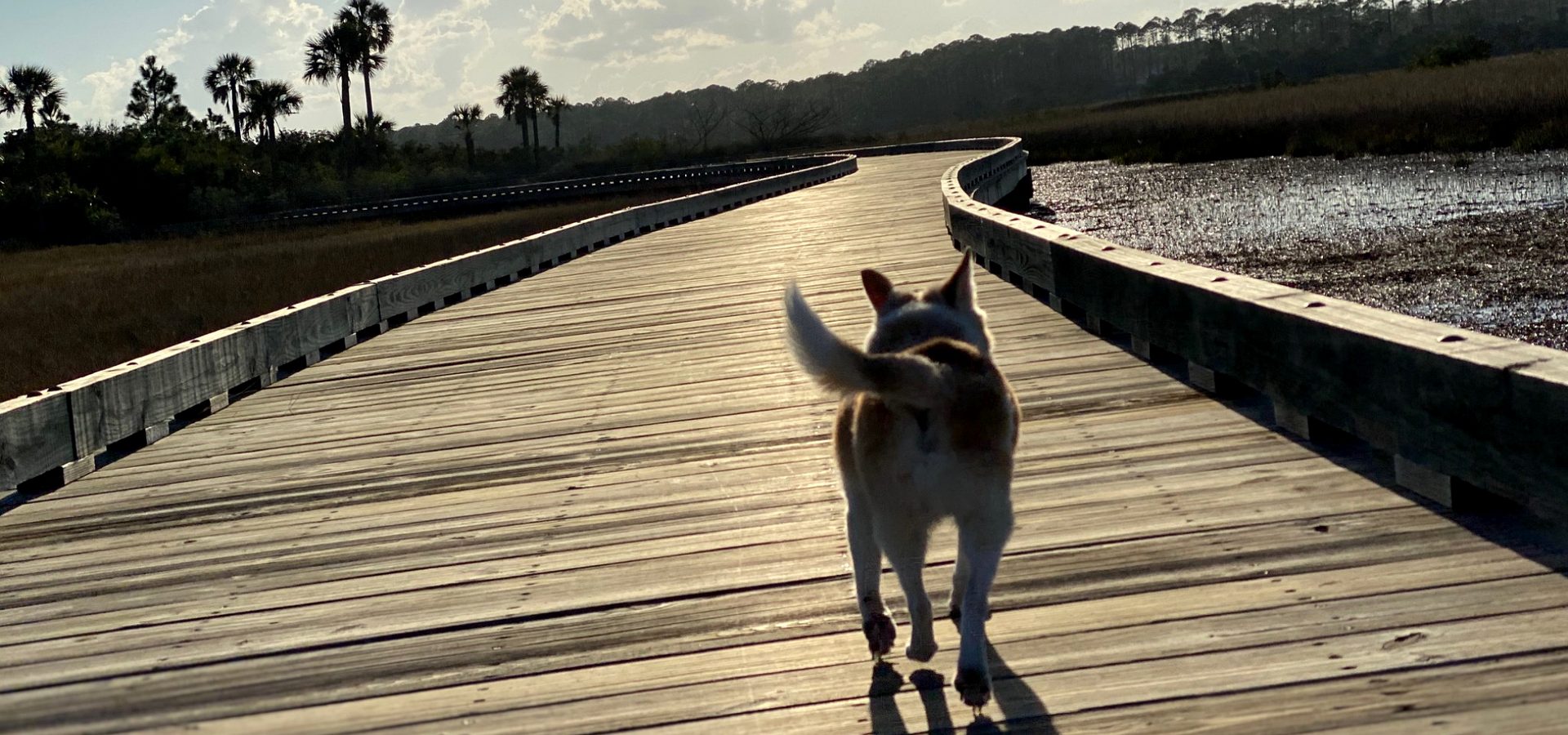
Living in Palm Valley: Ponte Vedra without the master plan.
West of the golf gates and east of the Intracoastal sits the version of Ponte Vedra Beach that predates the brochure: Palm Valley, where the lots run to acreage, the boats live behind the houses, and most homes answer to no HOA at all. It is the ZIP code’s freest quadrant, and the one whose homework is most parcel-specific. This is that guide.

By Krista Fracke — Broker Associate, Christie's International Real Estate First Coast · 20+ years in Northeast Florida · 500+ closings · client reviews
The market right now: 34 homes are currently for sale in Palm Valley, with a median asking price of $1,547,500. See every Palm Valley home for sale →
Live from the MLS · refreshed daily
What Palm Valley actually is
Palm Valley is the inland-water side of Ponte Vedra Beach — the corridor along Palm Valley Road, Roscoe Boulevard, and the canal streets feeding the Intracoastal, settled decades before the master-planned era and still built to that older logic: bigger lots, individual houses instead of product lines, and in the current market the overwhelming majority of listings carrying no HOA fee at all. Old Palm Valley and a handful of small enclaves add organized pockets, but the area’s character is the unorganized part — land, water, and owners who chose both.
One housekeeping note the search engines force on us: this is Palm Valley in St. Johns County, the Ponte Vedra Beach one — not the Palm Valley community near Orlando that shares the name. If you searched your way here from out of state, you are in the right place for the coastal version. East Coast Canal Estates — the canal-street original →
The water is the point — and the homework
The Intracoastal and its canals are why Palm Valley trades at Ponte Vedra prices without Ponte Vedra gates: a meaningful share of the market is genuinely navigable-water property, where the dock — not the kitchen — is the most valuable room. The homework is that "waterfront" spans several different purchases here: direct Intracoastal frontage, canal frontage with a run to open water, and marsh frontage that photographs like the first two but boats like neither.
And dock language deserves lawyerly reading: an existing dock, a permitted dock, and theoretical dock rights are three different assets, and canal depth at low tide plus any fixed-bridge clearance on the run out decide what your actual boat can be. None of that is knowable from a listing photo — it is knowable from permits, charts, and a walk at low tide, which is exactly the pre-offer package I put together for waterfront buyers here.
The no-HOA trade, honestly
No HOA means no fee, no architectural committee, and room for the boat, the RV, the workshop, and the guest cottage — the freedoms the master plans regulate away. The honest other half: it also means no one mows the medians, utilities run parcel-specific (wells and septic persist across this corridor at every price point — I confirm service per address rather than assume), and your streetscape depends on your neighbors’ taste rather than a design code. Palm Valley buyers are self-selecting: they want the freedom and accept the variance.
That trade is also why inventory here behaves differently — homes are individual, comps are trickier, and the acreage under the house is often carrying more of the value than the improvement (the same land-versus-improvement reading we run on the teardown market applies constantly in Palm Valley). Land & teardown lots in Ponte Vedra Beach →
On the market in Palm Valley right now


The part nobody tells you
The canal system is not uniform, and neither are the docks. Two Palm Valley houses a quarter-mile apart can differ by an entire boat class — one behind a stretch that carries draft at low tide, one behind a silted run that strands anything bigger than a skiff twice a day. Sellers rarely volunteer this; listing photos never show it. Before any waterfront offer here I check the dock’s permit history, the run to open water, and — when the boat matters to the purchase — I tell buyers to visit at low tide, because the honest depth of a Palm Valley canal is a twice-daily fact, not a marketing line.
This is the work I do every week. Boat-first search? Tell me the vessel and I’ll tell you which Palm Valley streets can actually host it — permits, depth, clearance, and all.
Work with Krista (904) 333-8595 Text
Broker Associate · Christie's International Real Estate First Coast · 20+ years · 500+ closings
Common questions
Does Palm Valley have HOAs?
Mostly no — the current market’s listings overwhelmingly carry no HOA fee, which is the area’s defining trade: full freedom over your land, and full responsibility for it. A few enclaves (Old Palm Valley among them) run organized associations; I flag which applies to any home you shortlist.
Can I keep a boat at my house in Palm Valley?
Often yes — behind the house on a canal or the Intracoastal, or beside it on the acreage no HOA regulates. The real questions are the dock’s permit status, the water depth on your specific run at low tide, and any clearance limits between you and open water — parcel facts I verify before an offer, not after.
Is Palm Valley on city water and sewer?
Parcel-specific: portions of the corridor still run wells and septic, at every price point, alongside served stretches. No blanket answer holds, so I pull the utility service records per address — the same discipline this site applies on the oceanfront strand.
Is this the Palm Valley near Orlando?
No — this is Palm Valley in St. Johns County, the Intracoastal side of Ponte Vedra Beach, Florida. The similarly named Central Florida community is unrelated; the shared name confuses search results constantly.
Palm Valley homes for sale →
The live market, from the MLS.
East Coast Canal Estates →
The canal-street original along Roscoe.
Old Palm Valley →
The organized enclave inside the freedom quadrant.
Boat-access homes in Ponte Vedra Beach →
Every navigable-water listing in the ZIP.
Palm Valley is a parcel-by-parcel market.
Docks, depth, wells, acreage, HOA-or-none — tell me the address or the wish list, and I’ll bring the parcel truth to the first conversation.
The Ponte Vedra Beach hub
Everything this site tracks about Ponte Vedra Beach — the communities, the oceanfront and estate tier, and the guides.
Communities
Oceanfront & estate tier
- PVB oceanfront
- Ponte Vedra Boulevard
- Luxury homes $2M+
- Estate homes $5M+ (region)
- Oceanfront condos
- What oceanfront costs to own
- Club membership costs, explained
- Land & teardown lots
- 55+ near PVB: the honest answer
- Living in Palm Valley — no HOA, real docks
- Moving here: the tax math
- Moving here from New York
- Moving here from California
- Buying after a liquidity event
- Selling a luxury home
- The quiet market, explained
Guides & tour days
- What’s coming to PVB (verified)
- Living in Ponte Vedra Beach
- Flood zones — the live data
- Is PVB safe from hurricanes?
- The 7 best beach neighborhoods, ranked
- The 10 best golf communities, ranked
- Homes near the Guana preserve
- South Ponte Vedra to Vilano — one coast
- Condos in Ponte Vedra Beach
- Gated communities
- Golf communities
- Pool homes
- Boat-access homes
- St. Johns County schools
- Tour day: the oceanfront estates
- Tour day: the golf communities
- Tour day: Old Ponte Vedra, deep