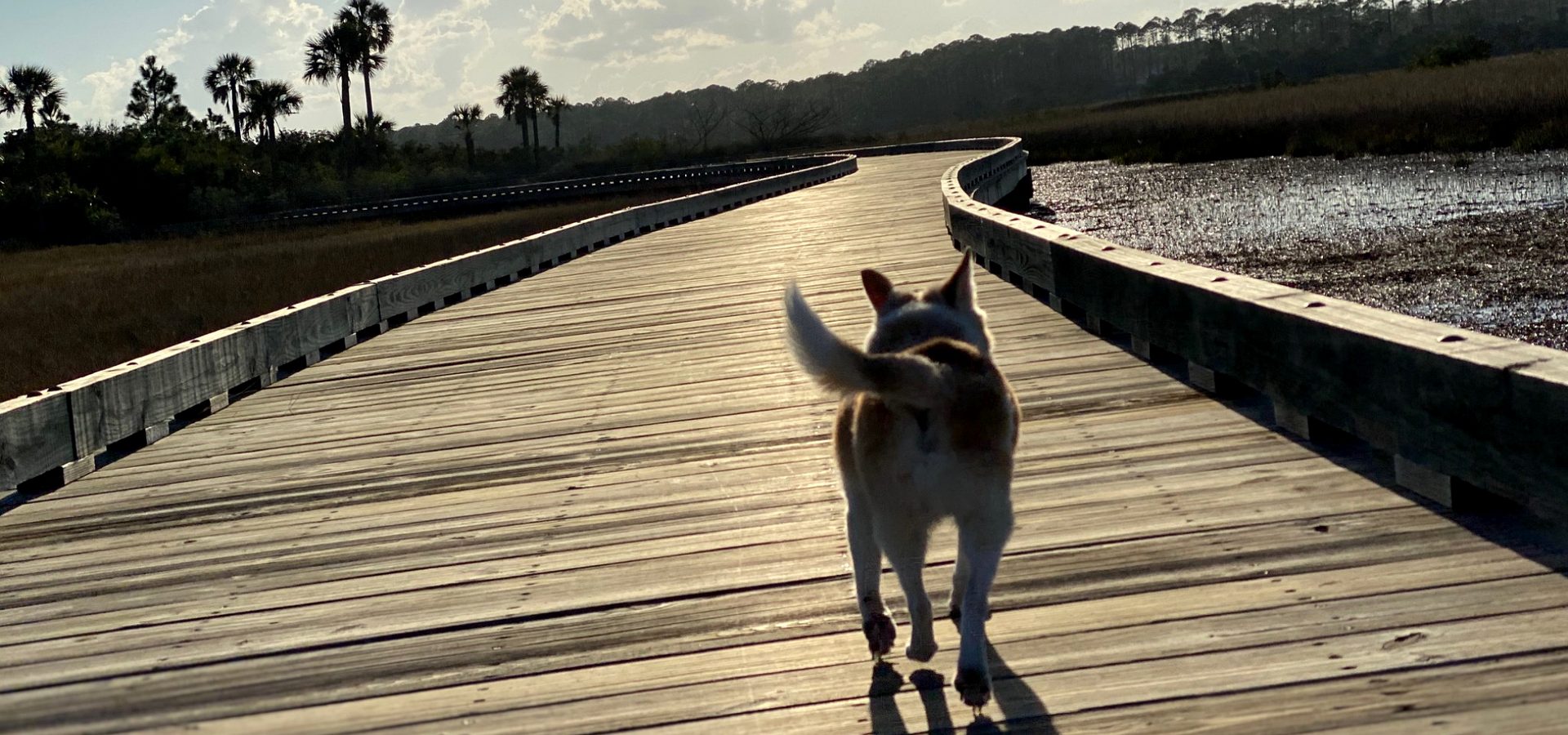
Fishing the First Coast: the water, and the homes on it.
This coast fishes twelve months a year: reds in the Intracoastal marshes, whiting off the sand, kings past the pier, bass in the St. Johns. Plenty of sites will tell you where to cast. This one adds the layer they can’t — which of those waters you can live on, straight from the MLS record. The guide first, honestly; the listings where they belong.

By Krista Fracke — Broker Associate, Christie's International Real Estate First Coast · 20+ years in Northeast Florida · 500+ closings · client reviews
The market right now: 792 fishable-water homes are currently for sale in Northeast Florida, with a median asking price of $795,000. See every home on fishable water →
Live from the MLS · refreshed daily
The four fisheries, north to south
Surf and pier: the whole ocean edge fishes for whiting, pompano, and reds in the trough, and the rebuilt Jacksonville Beach Pier is the infrastructure anchor — fishing admission runs five dollars (four for locals), and the pier’s admission covers the license requirement while you’re on it. Inlets and jetties: the St. Johns River mouth at Mayport and the St. Augustine Inlet are the serious-current, serious-fish ends of the spectrum, flanked by Vilano’s jetty culture at the bridge.
The Intracoastal and its marshes are the everyday fishery — the Tolomato and Guana system behind Ponte Vedra is sight-fishing water for redfish and trout, wrapped in preserve. And the St. Johns River itself is the freshwater giant: bass, cats, and stripers from Julington Creek south past RiverTown, with docks that fish at night under their own lights. Four different games, all within a forty-minute drive of each other. Homes near the Guana preserve →
The license truth, in one paragraph
Florida residents fishing saltwater from land or a structure attached to land qualify for the free resident shoreline fishing license — you register with FWC, you pay nothing. Step onto a boat and you need the regular saltwater license; freshwater has its own. Piers can carry their own blanket licenses (Jacksonville Beach’s admission includes it). Rules and seasons move — FWC is the source of record, and snook and redfish regulations in particular change often enough that checking before a keeper is part of the sport.
The practical version for homeowners: if your backyard is on the Intracoastal or a navigable canal, the free shoreline license generally covers casting from your own dock — one of Florida’s quietly great deals. From the boat tied to that same dock, it doesn’t. I keep this straight for buyers because the dock, the license, and the fishery are three different questions wearing one view.
The real-estate layer: homes where the fishery comes with the deed
Here is the crossover no fishing guide offers: our feed knows which listings sit on genuinely fishable water. Right now that includes oceanfront homes, St. Johns riverfront with private docks, Intracoastal and canal homes from Palm Valley down through St. Augustine, and creek-front pockets that most buyers scroll past. We built a dedicated page that filters the entire MLS to exactly those — ocean, river, Intracoastal, canal, creek, lagoon — and nothing else.
One honest footnote belongs here: over a thousand area listings sit on retention ponds and neighborhood lakes, and many of those ponds genuinely hold bass — a underrated Florida truth and a fine consolation fishery. But they are excluded from the fishable-water page on purpose, because a bass pond behind the fence and a dock on the Tolomato are different purchases at different prices, and mixing them would be exactly the kind of soft dishonesty this site exists to avoid. Every home on fishable water, live from the MLS →
Fishable water on the market right now


The part nobody tells you
Waterfront and fishable are not the same purchase, and dock rights are the hinge. A canal-front lot without a dockable shoreline is a view; a modest house with a grandfathered dock on navigable water is a fishery you own. Existing docks usually transfer, but the right to build one runs through state submerged-lands rules, Army Corps permitting, and sometimes an HOA — and none of that appears in the listing photos. It is the first thing I verify on any fishable-water home, because it is the difference between fishing your backyard and looking at it.
This is the work I do every week. Shopping with a rod in the truck? Tell me what you fish — reds on the flats, bass on the river, surf on Saturdays — and I’ll match the water first, then the house on it, dock rights verified before you offer.
Work with Krista (904) 333-8595 Text
Broker Associate · Christie's International Real Estate First Coast · 20+ years · 500+ closings
Common questions
Do I need a fishing license to fish from shore in Florida?
Florida residents get the shoreline saltwater license free — it covers fishing from land or structures attached to land, including your own dock. It does not cover fishing from a boat, and freshwater is a separate license. The Jacksonville Beach Pier’s fishing admission (five dollars, four for locals) covers the requirement while you’re on the pier. FWC is always the source of record.
Where can beginners fish around Jacksonville and St. Augustine?
The Jacksonville Beach Pier is the easiest start — admission covers the license question and the fish come to you. The Vilano area at the St. Augustine Inlet offers accessible jetty and shore fishing, and the Intracoastal’s public docks and parks fish well on moving tides. As skills grow, the Guana/Tolomato flats and the river inlets are the graduate school.
Which neighborhoods are best for people who fish?
It depends on your fishery. Intracoastal and flats anglers look at Palm Valley’s canals and the marsh-side corridors; river anglers at Julington Creek and RiverTown’s St. Johns frontage; surf-and-inlet anglers at the beach towns and the Vilano corridor. The fishable-water listings page cuts across all of them, and the boating-neighborhoods guide covers the storage-and-ramp logistics.
Can I fish the ponds in my neighborhood?
Often yes for residents — many community ponds hold bass and bream, and stormwater ponds are a real (if unglamorous) Florida fishery. The rules are the HOA’s, the water quality varies, and freshwater license rules apply. Treat it as the bonus fishery, not the reason to buy the house.
Homes on fishable water →
The whole MLS, filtered to water you can actually fish.
The best boating neighborhoods →
Ramps, docks, and storage — the logistics layer.
Palm Valley — canals, no HOA →
The ZIP’s freest quadrant, boats behind the houses.
The SPV–Vilano corridor →
Inlet culture at the south end of the strand.
Want the water matched before the house?
Your fishery, the neighborhoods on it, and dock rights verified before you fall for a view.
The Jacksonville Beaches
Jacksonville Beach, Atlantic Beach, and Neptune Beach — the towns, the condo towers, and the oceanfront ring.
The three towns
Condos & oceanfront
- Jax Beach condos
- Oceanfront condos in Jax Beach
- Oceanfront across Northeast Florida
- What oceanfront costs to own
- Short-term rental rules, town by town
- Milestone inspections & SIRS: the buyer’s guide
- Beach water quality — how to actually know
- Fishing the First Coast
- Dogs at the beach — the real rules
- Can you park the boat at your house?
- Fiber internet, street by street
- The commute map — measured, not guessed
- The snowbird guide — owning here half the year
- Home insurance — what actually moves the number
- The Florida maintenance calendar
- Teardowns & lot value — the tax-roll signal
- Palm Valley dock homes — the Roscoe corridor
- Turn your vacation into your life
- From the Inn & Club week to the address
Nearby & compare